Custom WordPress Website vs Website Builder: Which Is Better for Your Business?
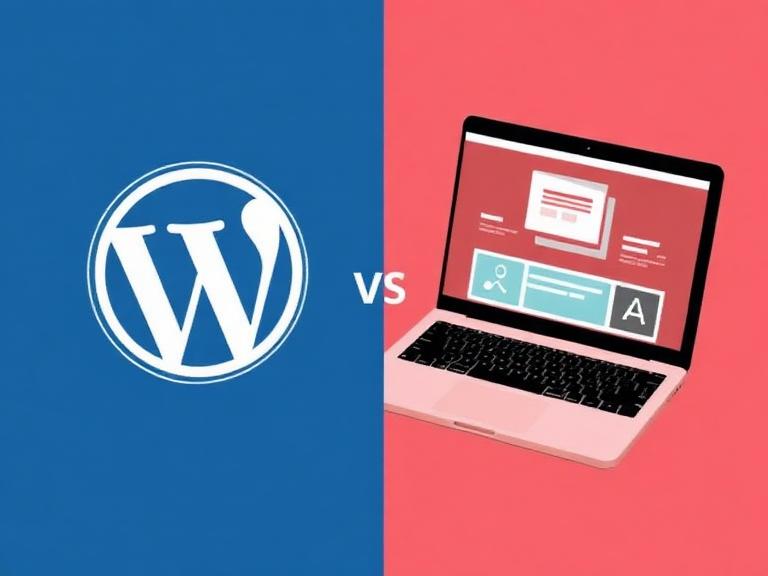
If you're creating a new business website, you've probably come across platforms like Wix, Squarespace or Shopify.
They're popular because they promise a website in just a few hours. While these platforms can work for some businesses, they aren't always the best long-term solution. Understanding the differences between a custom WordPress website and a website builder will help you choose the option that fits your business goals.
The biggest difference is flexibility. Website builders use pre-designed templates with limited customisation.
While you can change colours, fonts and images, more advanced functionality is often restricted.
A custom WordPress website is built around your business, allowing you to create unique layouts, add custom features and expand your website as your business grows.
Another important consideration is ownership. With WordPress, you own your website files, content and hosting account. You're free to move your website to another hosting provider or work with a different developer if needed.
Many website builders, however, keep your website within their own platform, making it difficult to migrate elsewhere.
Search engine optimisation is another area where WordPress offers significant advantages. A custom-built WordPress website gives developers full control over page structure, metadata, schema markup, image optimisation and website performance.
While website builders include basic SEO tools, they often have technical limitations that become more noticeable as your SEO strategy grows.
Performance also matters. Fast-loading websites improve user experience and can contribute to better search engine rankings.
A professionally developed WordPress website can be optimised to load quickly by reducing unnecessary code, compressing images and using efficient hosting. Website builders include many built-in features that aren't always needed, which can sometimes affect loading speeds.
Scalability is another advantage of WordPress. Your business may start with a few service pages, but later require online bookings, an eCommerce store, customer accounts or advanced integrations. WordPress can accommodate these changes without requiring you to move to an entirely new platform.
This makes it a practical solution for businesses planning long-term growth.
Cost is often misunderstood. Website builders usually charge monthly subscription fees that increase as you add features or require more storage.
While a custom WordPress website may involve a higher initial investment, ongoing costs are often more predictable, particularly if your business continues to expand.
Maintenance is also worth considering. Like any software, WordPress requires updates to keep it secure and performing well.
Many web developers offer maintenance services that include backups, security monitoring and software updates, allowing business owners to focus on running their business rather than managing technical tasks.
There isn't a single solution that's right for everyone. A simple website builder may be suitable for a hobby project or temporary website. However, businesses that rely on their website to generate leads, attract customers and build credibility often benefit from the flexibility, ownership and long-term value that a custom WordPress website provides.
Choosing the right platform is an investment in your business's future. A website should be able to grow alongside your business, support your marketing efforts and provide the freedom to adapt as your needs change. That's why many businesses continue to choose WordPress as the foundation for their online presence.